
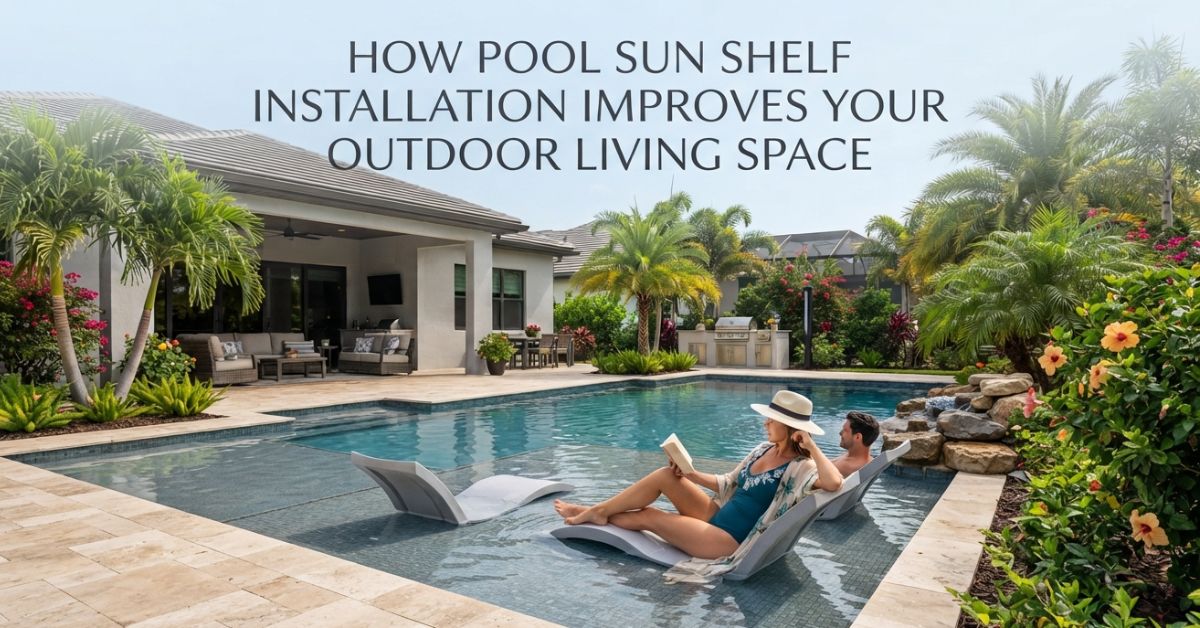
Imagine two lounge chairs submerged in six inches of refreshing water, with drinks on the armrests, and children making noises in the shallow water. That’s the whole magic in one picture. The installation of a sun shelf has quietly emerged as one of the most requested innovations in pool construction, and it is easy to see why once you realize how people actually enjoy it.
What a Sun Shelf Actually Is (and Why Everyone Wants One)
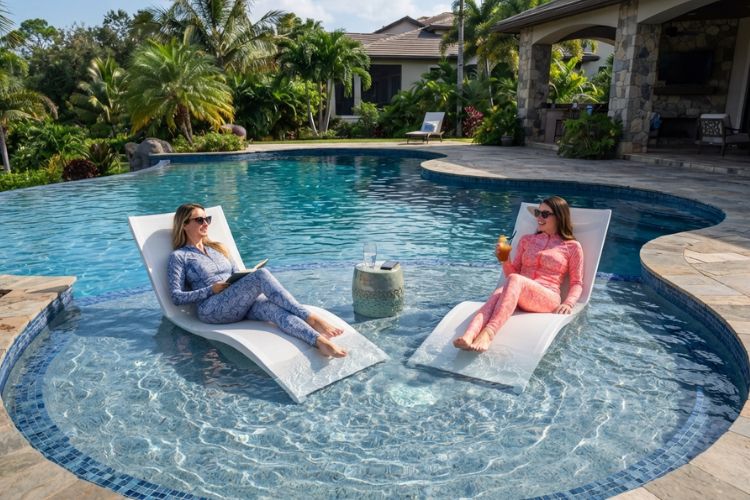
A sun shelf, also known as a tanning ledge or Baja shelf, is a flat, shallow zone integrated into the pool that is between six and twelve inches deep. It is not meant for swimming laps, but instead provides a place for lounging and wading, allowing little kids to play without being constantly supervised. What used to be a luxury builder’s element a decade ago has become an integral part of good outdoor living and one of the most wanted innovations in pool remodeling.
The Outdoor Living Case for a Shallow Shelf
A pool’s value isn’t just measured in laps swum. Consider what a swimming pool shelf actually does for the space:
- Gives non-swimmers and young kids a safe, shallow zone that isn’t a step or a stair
- Creates a natural gathering spot for entertaining, since people cluster near water even when they’re not swimming
- Doubles as lounge seating without hauling pool furniture in and out all summer
- Extends usable square footage without extending the footprint of the actual pool
This is really the heart of pool outdoor living done well: the water becomes a living space, not just a place to swim laps and get out.
Design Choices Worth Thinking Through
Not every pool sun shelf looks the same, and the details matter more than people expect:
- Umbrella sleeves built into the concrete for shade without dragging furniture around
- Bubblers or deck jets for a spa-like feel without the cost of a full spa
- In-water furniture versus loose loungers you place and move yourself
- Shelf size, big enough for two loungers side by side, is the usual sweet spot
Get the sizing wrong, and you end up with a shelf too cramped to actually use, which defeats the entire point of building one.
Retrofitting an Existing Pool vs. Building One In From the Start
If you’re designing a new pool, adding a swimming pool shelf into the original plan is straightforward and relatively low-cost. Retrofitting an existing pool is more involved, since it usually means cutting into the existing shell or, in some cases, replacing it. Fiberglass pools in particular sometimes make more sense to address during a broader pool renovation rather than as a standalone modification, simply because of how the shell is structured.
What a Sun Shelf Renovation Actually Involves
Here’s roughly what the process looks like once you decide to move forward:
- Design consultation to determine shelf size, depth, and placement
- Structural assessment if you’re retrofitting an existing shell
- Excavation or shell modification depending on new build versus retrofit
- Plumbing adjustments if you’re adding bubblers, jets, or extra circulation
- Finishing work to blend the new shelf seamlessly with the existing pool surface
Homeowners searching for pool sun shelf installation in Lehigh Valley properties are often surprised by how much cleaner the retrofit process is with fiberglass compared to gunite, since fiberglass shells allow for more predictable, less invasive modifications.
Is It Actually Worth the Investment?
Cost varies widely depending on new build versus retrofit, but the value case is pretty strong either way for a pool renovation like this. A sun shelf tends to get used more consistently than the deep end of most residential pools, especially for families with young kids or anyone who entertains regularly. It also tends to be one of the features buyers specifically mention when a home with a pool goes up for sale, which isn’t nothing if resale value is on your mind at all.
Finding a Builder Who Gets the Details Right
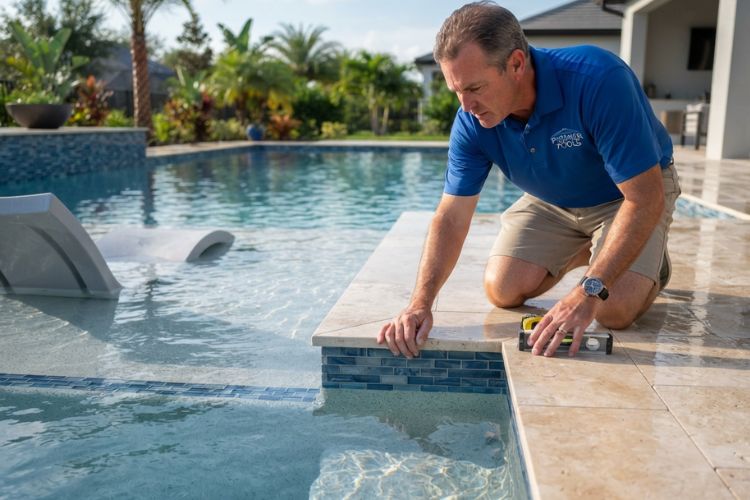
Not every construction company behaves similarly when it comes to the size of its fixtures or connecting plumbing, and the difference is obvious as soon as actual users sit down on it. Working with the best pool contractor for this task means choosing someone who has done more than a few of these projects and knows what mistakes to avoid before it’s too late and the concrete is already set.
Frequently Asked Questions
How deep should a sun shelf be?
Most have a depth of between 6 and 12 inches, which allows for some water play while still keeping feet and any furniture dry.
Can I add a sun shelf to my existing pool without replacing the whole thing?
It largely depends on the type of pool and how it’s constructed. Fiberglass pools usually have a little more wiggle room than concrete pools, but any alteration must be properly assessed structurally first.
Does a sun shelf make the pool colder overall?
Not really. Shallow water is able to warm up quicker than deeper water since it will heat up quicker in sunlight, so shelves are usually one of the warmest areas in a pool.
How much does adding a sun shelf typically add to a project?
That all depends on the size and features of the shelf as well as whether it’s being built on a new pool or retrofitted. The only way to get real numbers for your specific pool is to request an estimate.
Ready to Add One to Your Own Backyard?
A sun shelf turns a pool from something you swim in occasionally into a space you actually live in all summer, the whole point of good pool outdoor living. If your current pool is missing one, or you’re planning a new build and want it done right from day one, the smartest move is a conversation with someone who’s built plenty of these before.