
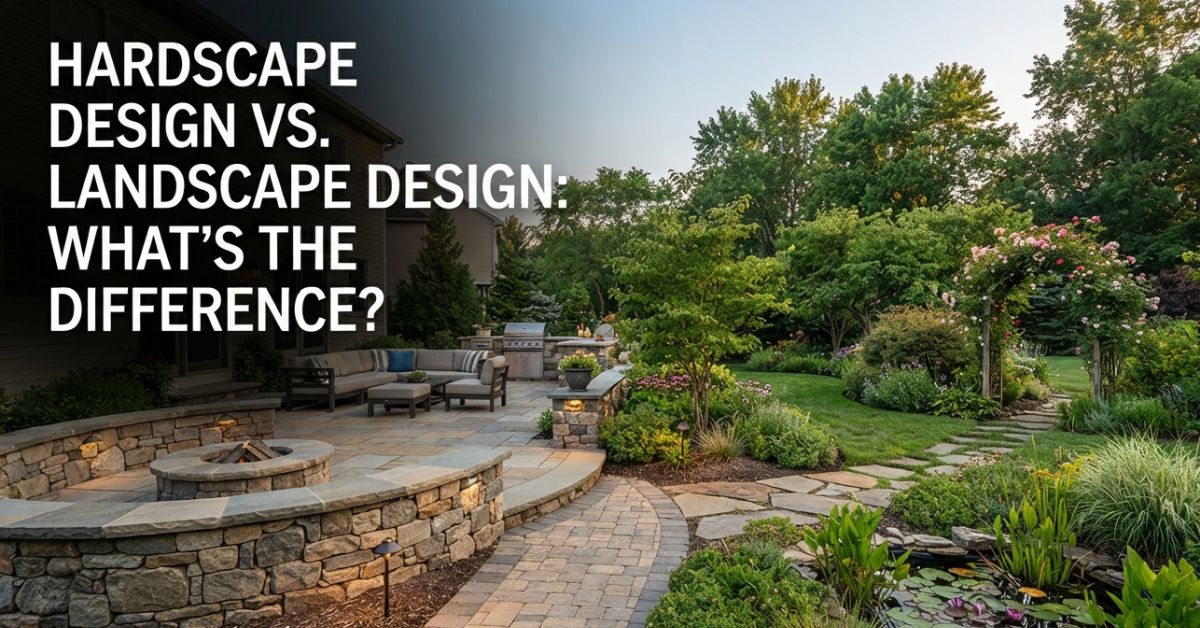
Someone says “we’re redoing the landscaping” and means a brand new stone patio. Someone else says the same thing and means new flower beds. Both are using the word wrong, technically, and most homeowners have no idea there’s even a distinction until a contractor starts asking which one they actually meant. Understanding hardscape vs landscape upfront saves a lot of confused phone calls once a project gets underway.
Hardscape vs Landscape: The Simple Breakdown
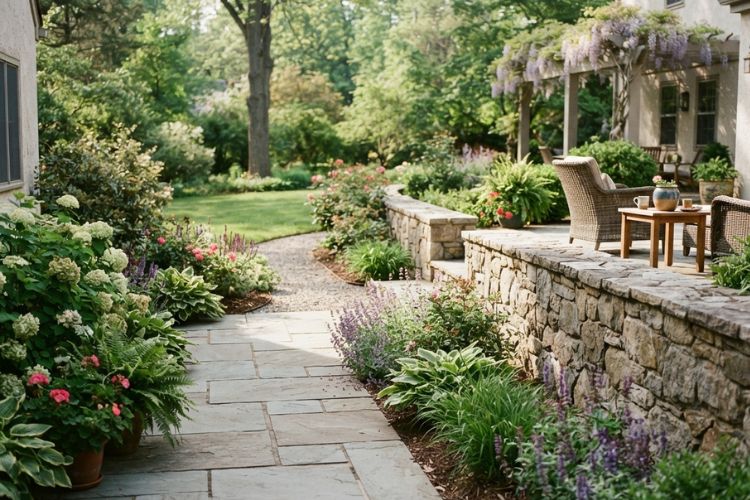
Here’s the easiest way to keep it straight:
- Hardscape covers anything solid and structural: stone, concrete, wood, and other hard materials
- Landscape covers anything living and growing: plants, grass, trees, and soil
A patio is hardscape. The flower bed next to it is landscape. A retaining wall is hardscape. The ivy climbing it is landscape. Once you’ve got that mental split, most backyard conversations get a lot less confusing fast.
What Actually Counts as Hardscape
If a contractor is pouring, laying, or building something that doesn’t need watering, it’s hardscape. That usually includes:
- Patios, walkways, and pool decking
- Retaining walls and seat walls
- Pergolas, gazebos, and outdoor kitchens
- Fire pits and built-in fireplaces
- Fences, gates, and decorative walls
This is the bones of your outdoor space. It’s what stays standing through every season without needing a drop of water or a single pair of pruning shears.
What Actually Counts as Landscape
Landscape, meanwhile, is everything that grows, changes with the seasons, and needs ongoing care. Think:
- Trees, shrubs, and perennial beds
- Lawn, whether it’s sod or seeded
- Mulch, groundcover, and garden borders
- Irrigation systems keeping everything alive
- Seasonal color rotations and planting beds
If it needs sunlight, water, or seasonal maintenance to look good, it almost always falls under landscape rather than hardscape.
Why This Distinction Actually Matters for Your Budget
This is where the terminology shifts from theoretical to practical. Hardscape usually represents the largest expense upfront since it involves digging, materials, and labor-intensive installation. The initial cost of landscape tends to be lower, but it will involve continuous costs such as mulching, replacing plants, and maintenance-related expenses over the years.
Knowing which category a request falls into also changes who you’re hiring. Asking a landscaper to build a retaining wall, or asking a mason to design your planting beds, usually ends with someone outside their actual expertise.
It also changes how you phase a project if the full budget isn’t available right away. Many homeowners install the hardscape first and phase in plants and finishing touches over the following seasons, since the structural work is harder to retrofit later and the planting can evolve gradually without disrupting anything already built. Going the other direction, planting first and adding hardscape later, often means digging up or working around mature beds that took years to establish.
Hardscape Design Ideas Worth Considering
Once you know what falls under the hardscape umbrella, a few ideas consistently deliver the most impact:
- A multi-level patio that creates distinct zones for dining, lounging, and a fire feature
- Natural stone paths connecting different parts of the yard instead of straight concrete walkways
- A seat wall doubling as extra seating and a clean edge for garden beds
- An outdoor kitchen built into the same material palette as the patio for a cohesive look
- Mixed materials, like stone coping against wood decking, instead of one surface stretching the whole yard
Good hardscape design ideas usually share one trait: they make the yard feel like one connected space instead of a patio here and a lawn there with nothing tying them together. The homeowners who get the most out of their hardscape design ideas tend to start with how they actually want to use the space: dinner parties, quiet mornings, kids playing, rather than picking materials first and figuring out function later.
When Hardscape and Landscape Need to Work Together
The most beautiful gardens do not separate the two types of landscaping in the same manner that this article has up to this point. A stone patio that consists purely of mulch does not look complete, nor do attractive gardens planted next to cracked paths. Equally nice hardscape landscaping combines stone or concrete services with soft plants to provide relaxation to people.
Good hardscape landscaping also solves practical problems, not just aesthetic ones. Plants placed along a retaining wall help with drainage and erosion control. A patio’s grading affects which plants will actually thrive nearby, since runoff and shade patterns shift the moment hardscape goes in. This is especially true around a pool, where hardscape design services and planting plans really need to be considered together from day one, not handled as two separate, disconnected projects.
Finding the Right Team for Each Part of the Project
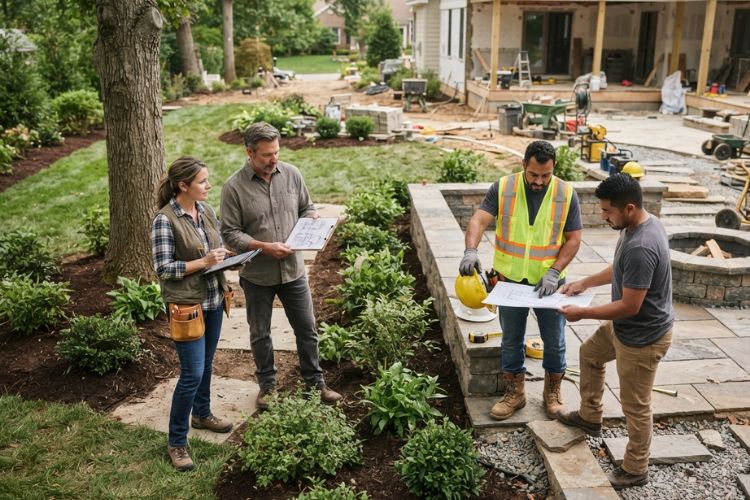
Not every company does both well. Some crews specialize entirely in hardscape services, stone, concrete, structural work, and subcontract or skip planting altogether. Others focus purely on plants and lawns and have little experience with retaining walls or patio drainage. Before hiring anyone, it’s worth asking directly whether they offer hardscape services in-house or farm that part out to a separate subcontractor, since that answer tells you a lot about how coordinated the finished project will actually be.
A company that genuinely handles both tends to deliver a more cohesive result, since the same team is thinking about how hardscape and landscape interact rather than handing the project off mid-stream. This matters even more on projects involving pool landscape design, where drainage, root systems, and hardscape placement all affect each other directly.
Frequently Asked Questions
Which usually costs more, hardscape or landscape?
Hardscape generally costs more at the outset due to labor and materials. It becomes cheaper than landscape in the long run since it will incur expenses for maintenance, replacement of plants, seasonal upkeep, etc.
Can I do landscape work myself and hire out only the hardscape?
Absolutely, and a lot of homeowners do exactly that. Professional hardscape services generally require more specialized skill and equipment, while basic planting and lawn care are more approachable as DIY projects if you’ve got the time.
Does hardscape need regular maintenance too?
Its maintenance requirements are lower than those of landscaping, but it requires some maintenance, such as resealing pavers, refilling joints, as well as ensuring the integrity of the concrete, which may crack or shift during freeze-thaw cycles in winter.
Should hardscape or landscape get designed first?
Hardscape normally comes first since it defines hard limits and grading and drainage around which the planting plans are built. Attempting to plan landscaping without reaching any decisions about hardscape may lead to having to modify placement of plants later on.
Is it normal to hire two separate companies for each part?
It’s common, but not ideal. Two companies working independently can miss how grading, drainage, and root systems interact, which sometimes leads to problems neither side anticipated. A single team handling both tends to catch these conflicts before they become expensive fixes.
Ready to Plan Both Halves of Your Backyard?
Once you understand hardscape vs landscape, planning the whole yard gets a lot less overwhelming. Whether you’re starting with a patio, a planting bed, or a full hardscape landscaping overhaul all at once, the right team treats them as one connected project instead of two separate jobs that happen to share a property line.